Fitzgibbon Community Centre is at the heart of Fitzgibbon and offers space for activities and programs for everyone.
Fitzgibbon Community Newsletter
No. 14 (July 2026)
Welcome to our monthly community newsletter! It aims to help foster a sense of belonging and connection by sharing local-interest items and celebrating the people and places that make Fitzgibbon special. Disclaimer: The content does not necessarily reflect the views of the management of Fitzgibbon Community Centre.
This month in your newsletter:
Fifteen Parks, Countless Possibilities
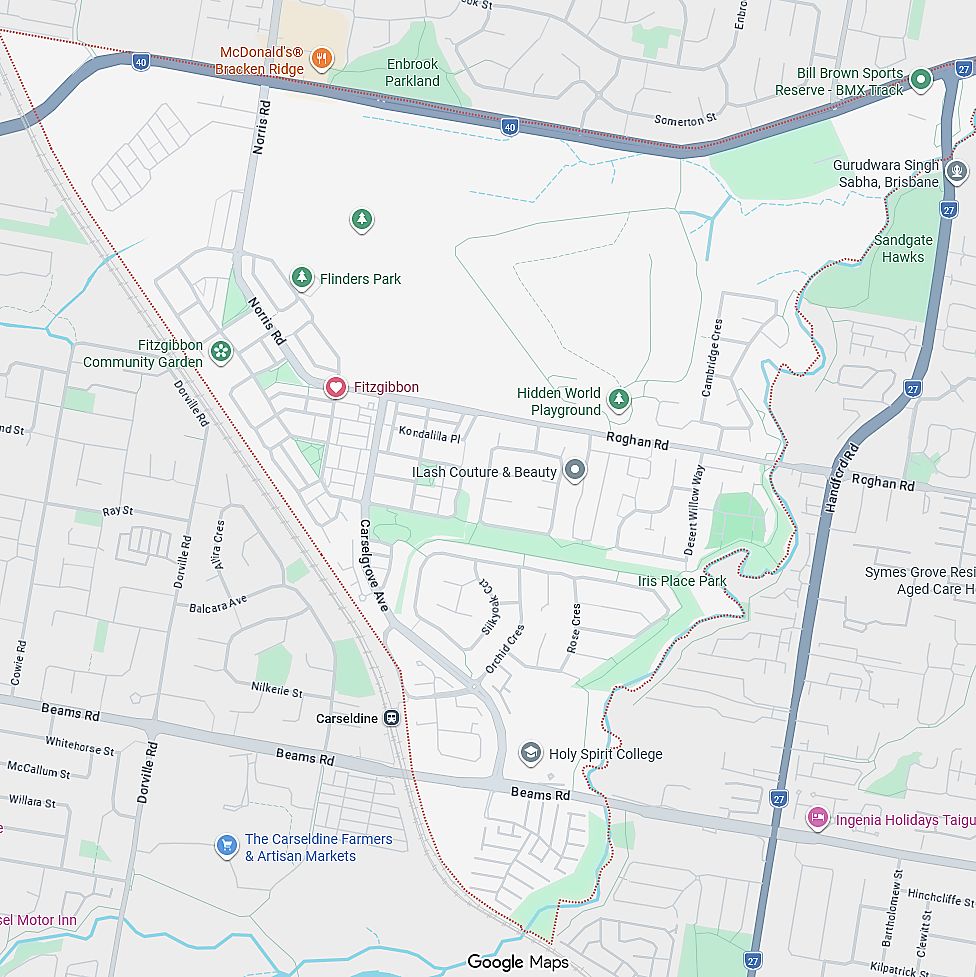
Fitzgibbon is home to fifteen parks, a figure that includes only one of the bushland reserves. In the coming issues, we will take a closer look at these parks, their locations and the facilities there. These range from the Bill Brown Sports Reserve, which is vast and has many different community facilities, to the mysterious-sounding Beams Road Park 440, which has none.
You might be surprised by the kinds of amenities in some of these locations—playgrounds, exercise equipment, barbeques, dog off-leash areas and some specialised facilities like the pool, pump track and netball courts. There may also be lesser-known facilities or history near these parks.
For now, here is a list of names to help you work out where they are. In time, we will take a much closer look so you can see what is there. We hope this series encourages you to explore our suburb and discover our parks.
| Park Name |
|---|
| Carselgrove Avenue Park |
| Kestrel Way Park |
| Cambridge Crescent Park |
| Iris Place Park |
| Pine Tree Close Park |
| Cape Arid Park |
| Kimberly Park |
| Kuringgai Park |
| Daintree Park |
| Kuranda Park |
| Fitzgibbon Bushlands |
| Serpentine Close Park |
| Beams Road Park (No. 440) |
| Silkyoak Circuit Park |
| Bill Brown Sports Reserve |
The Power of Touch: Sharing Texts Through Braille
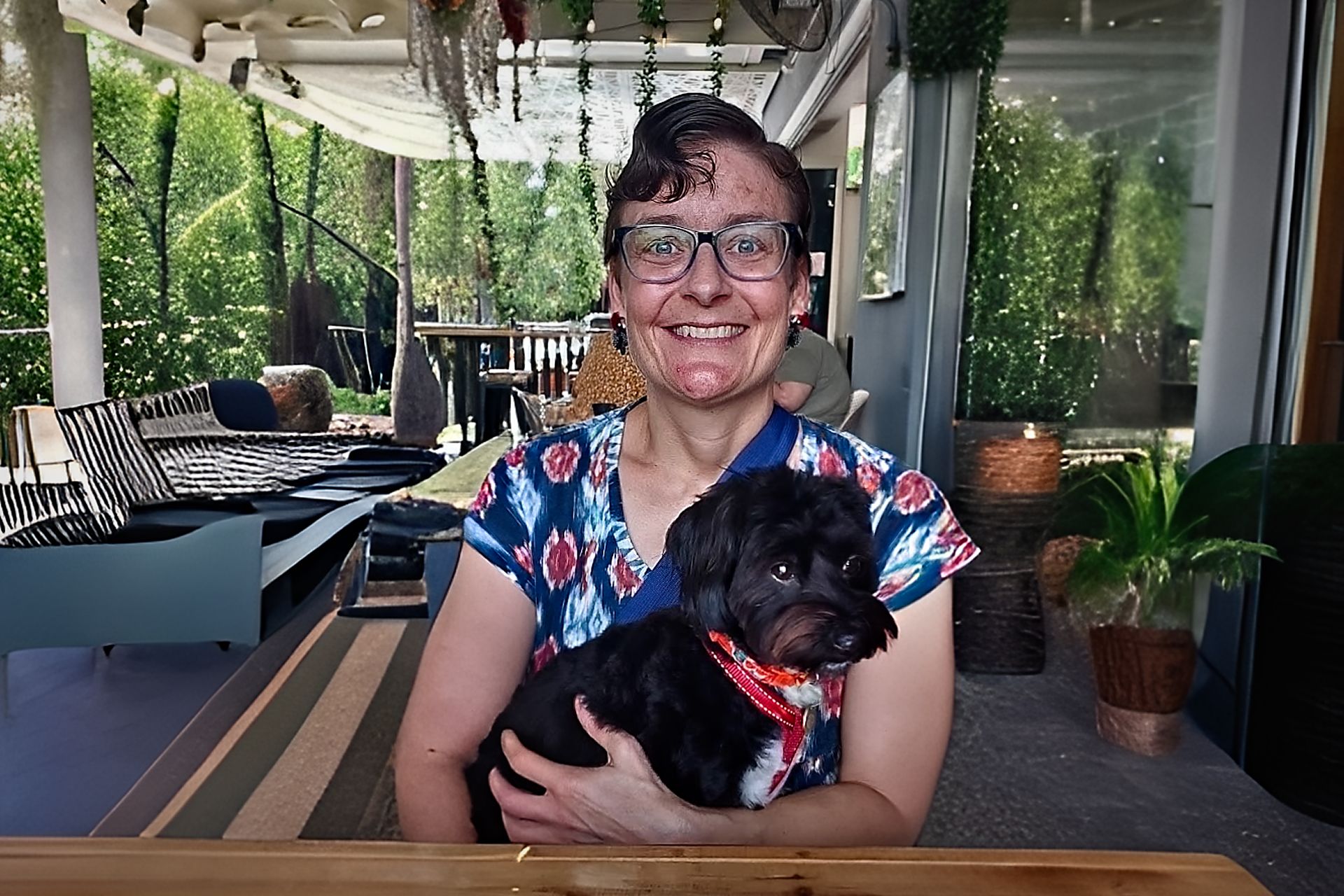
Every weekday, Janet Douglas, who’s been living in Fitzgibbon since 2019, travels to Annerley for her job as the senior transcriber at Braille House, Queensland’s top provider of Braille transcription services. This registered charity turns documents into Braille to make them accessible to people who are blind or have low vision. Transcribers convert books, magazines, documents, restaurant menus, business cards, signage and educational materials into Unified English Braille, the code used for literary and technical materials across the English-speaking world.
In 2013, Janet took on a volunteer position setting up the digital catalogue in the library at Braille House. After developing an interest in Braille books, she completed the Braille for Print Users course in 2016, then took an online course. Along with her library work, Janet started transcribing books into Braille. It took her about a year to feel comfortable transcribing. In 2022, Janet became a Braille House employee.
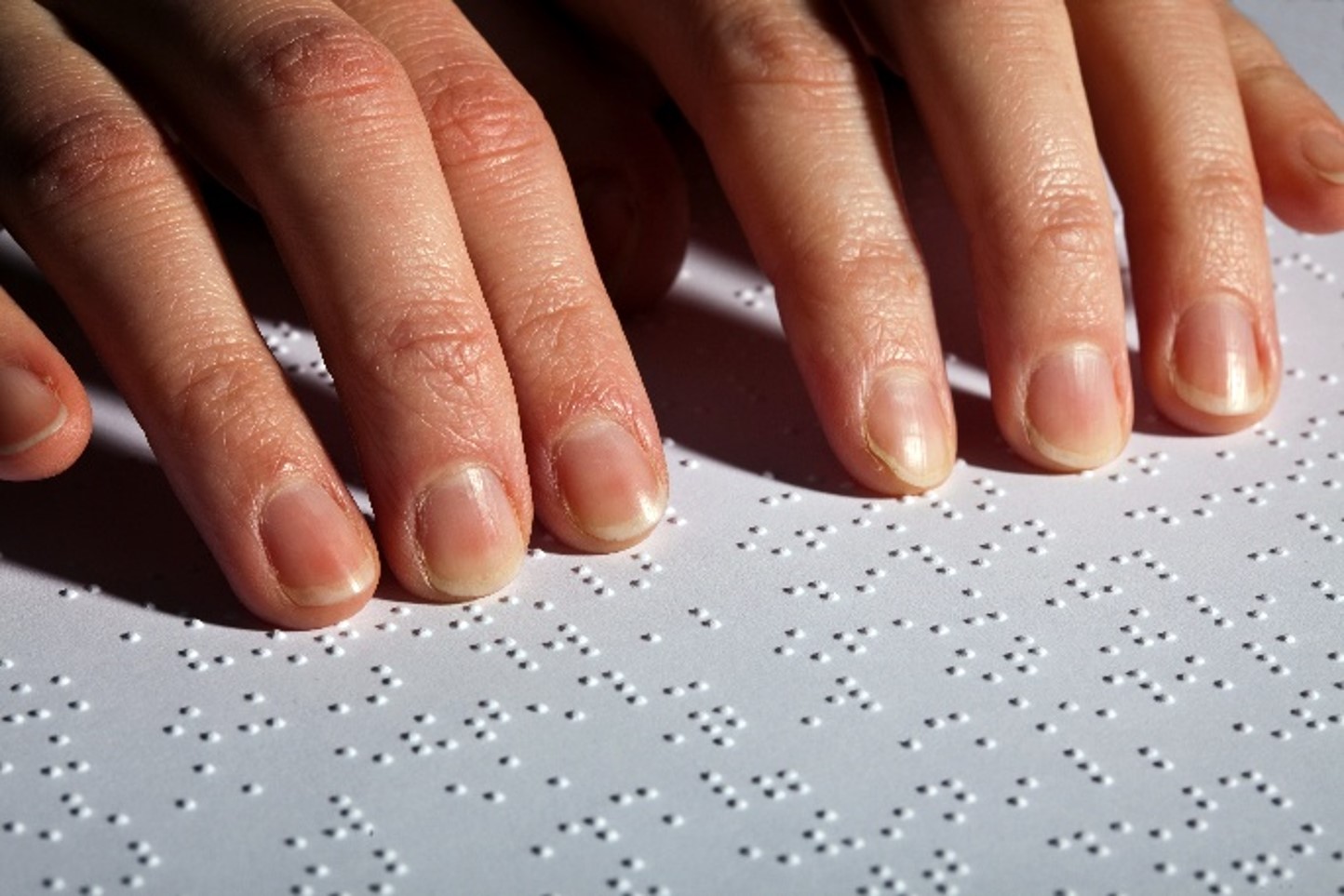
The basic form of Braille (Grade 1) spells out each letter without contractions and is often used on signs. In the more widely-used contracted form (Grade 2), common letter combinations (such as prepositions) are treated as a single character. For experienced Braille readers, this is easier than Grade 1 Braille, and it saves space.
People with reduced touch sensitivity or limited motor control can instead use the Moon system to read by touch. It’s easier to learn than Braille, because its characters are significantly larger and mostly alphabet-based (unlike Braille dots). Moon type is mainly used by people who lost their sight as adults and already know what letters look like. Braille House has the only Moon library in Australia.
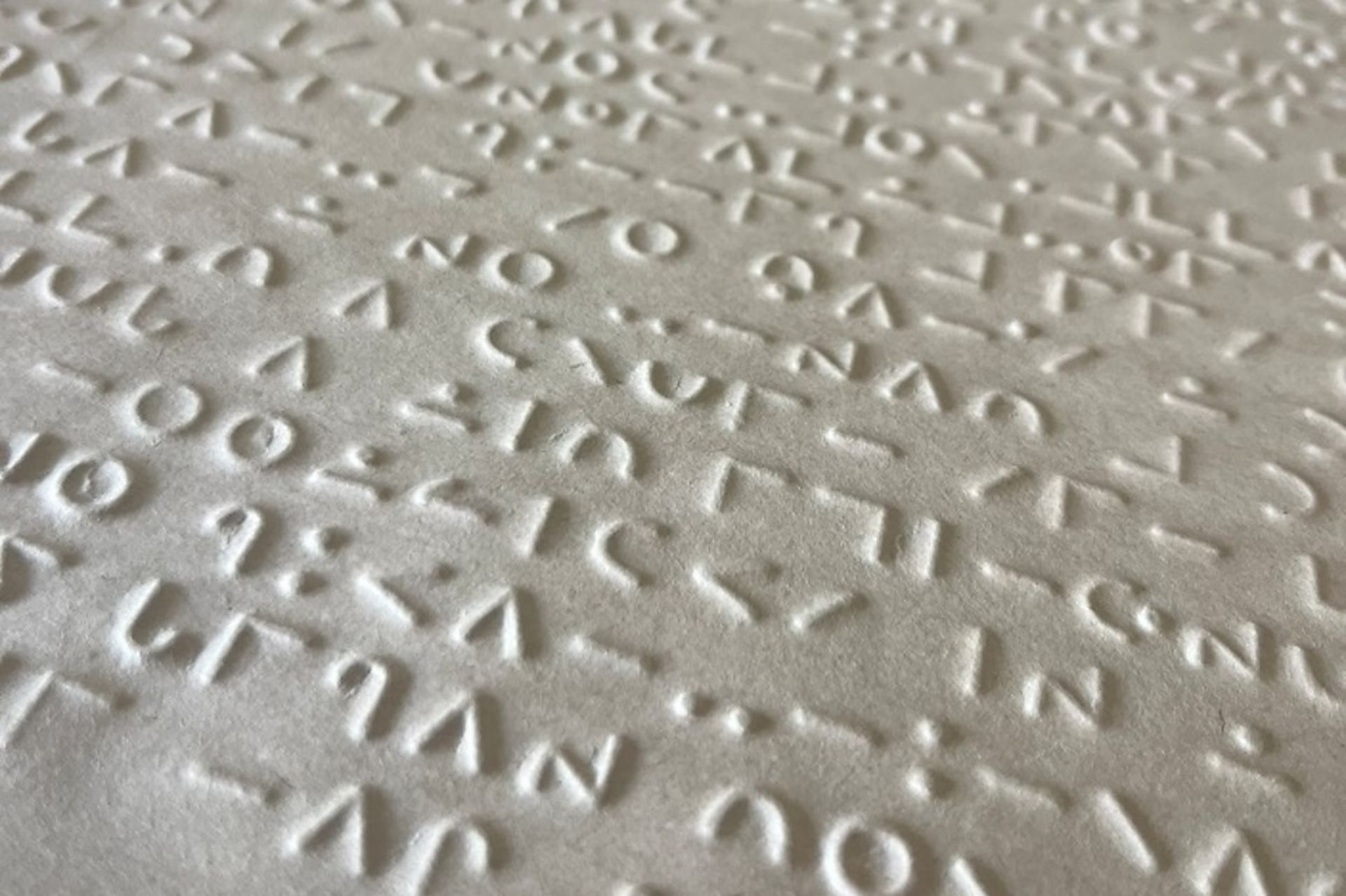
Moon Script
This is a page of Moon Script. If you look closely, you will recognise the shape of some letters.
Transcribing texts manually is very slow. Since around 2000, transcribers usually import electronic texts into Duxbury software, which converts them to Braille and formats the pages, lines, headings and so on as appropriate for Braille. After Janet checks the document, it is embossed on a Braille embosser—like a printer outputting Word documents, but with tactile dots. Heavy paper in one standard size is used to ensure easy reading by the fingertips.
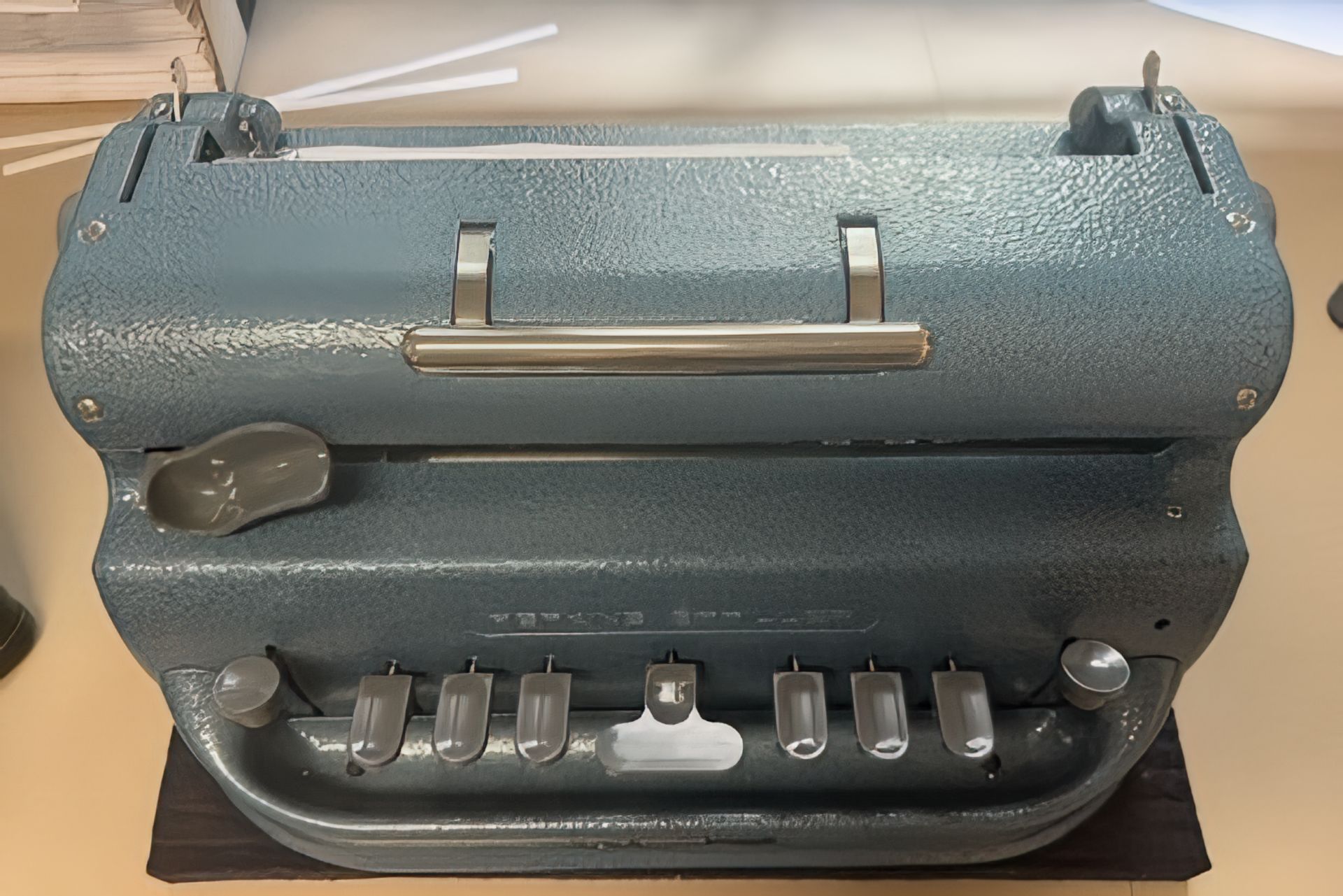
Perkins Machine
This is a Perkins machine. It is like a typewriter but is used for embossing Braille. The middle button is the space bar. Then it goes out to the left, dot 1 2 3, to the right, dot 4 5 6. The button on the far right is backspace, and one on the far left is for a new line. The funny grey thing along the top slides the hammer from left to right and back again. Although the machine looks quite ancient, this is a brand-new one. These very useful machines have to be sturdy to put up with the bashing they get.
Braille House has transcribed and embossed Braille texts for well over a century (over 126,301 pages in 2024 alone!). It creates tactile QR signs, state-specific Braille calendars, tactile maps and wayfinding solutions. It also provides emergency resources for people with vision impairment. Braille texts are provided on a fee-for-service basis for businesses, government offices and educational institutions.
Braille House advocates for “touch literacy” and teaches this skill to vision-impaired and sighted students. A separate organisation called the Braille Advisory Service supports Braille-using students in schools, but Braille House provides all the leisure reading for students in state schools. It also lends out games.
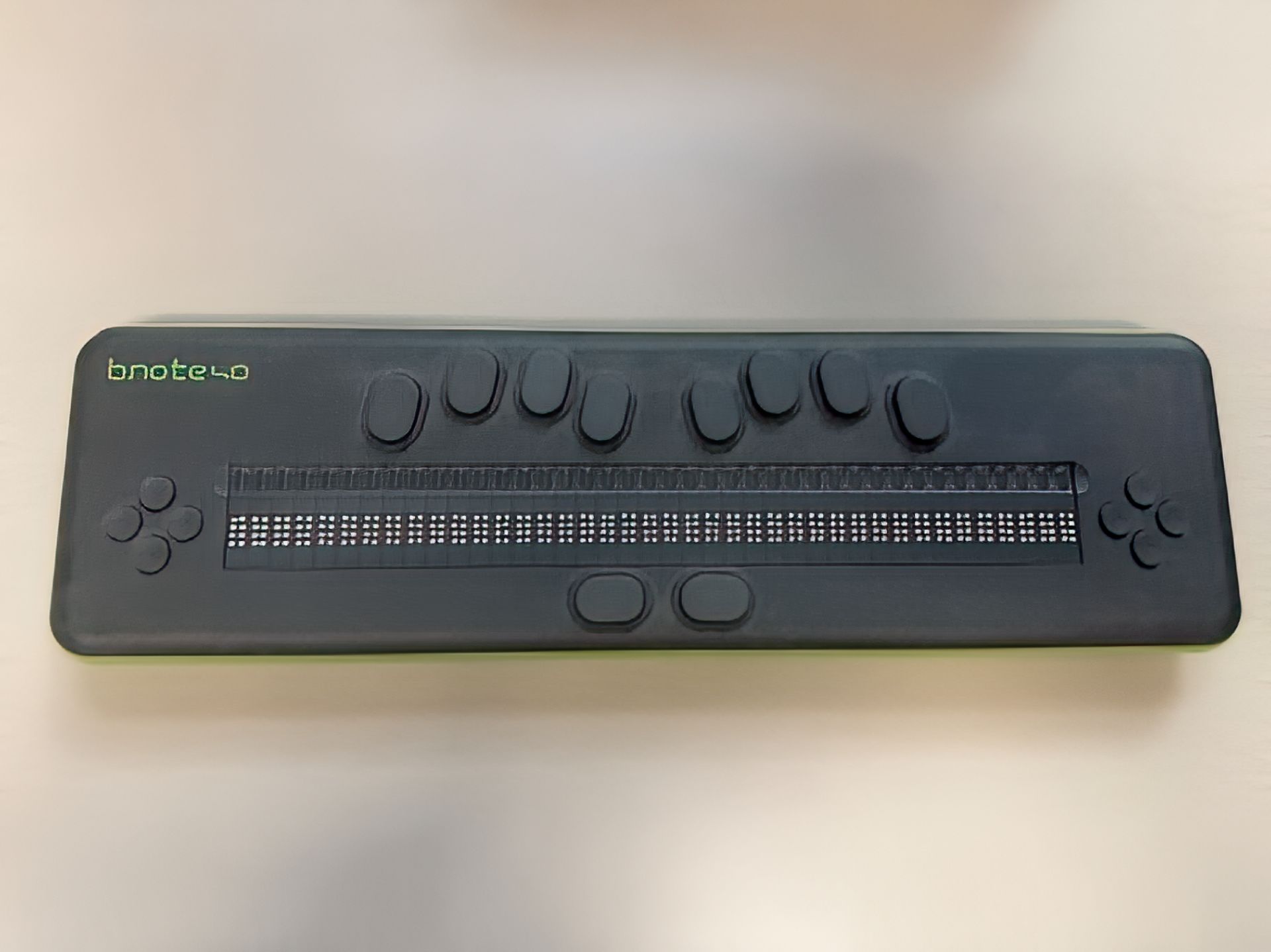
Digital Braille Display
This is a digital Braille display, the current technology. The little pins go up and down, and as the reader finishes the line of Braille, they press the button on the side and the pins refresh, showing the next line of Braille. These systems, which display a BRF (Braille Ready Format) file, are extremely expensive.
The Braille House library produces every book in embossed and BRF formats, so readers can choose how they want to read. Not every Braille library does that.
Graphics can be challenging. Embossers can’t produce lines, only dots—and too many dots create confusion. “It’s really got to be a sparse image with very few things in it,” comments Janet.
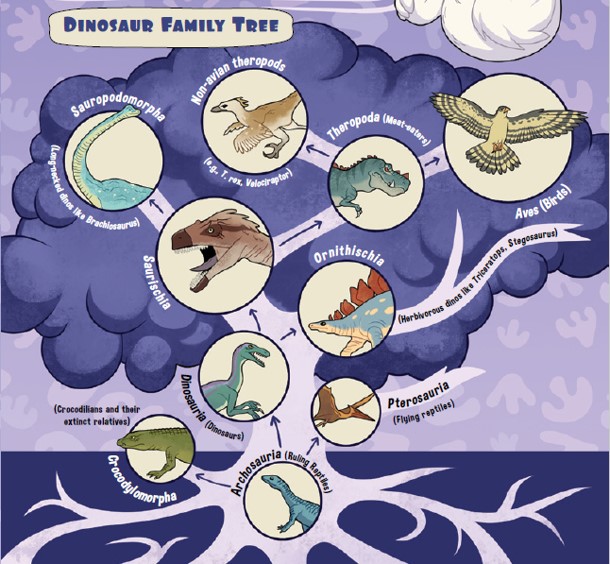
Complex Image Example
Just imagine the challenges presented by this image. Taken from OYLA Junior March 2026, page 21. Published by Oyla Australia.
A PIAF (picture in a flash) machine prints black ink on special paper so that the ink rises and creates thick and thin lines. But “if you confuse things too much, all you get is a craziness of lines.” Sometimes it’s best to just describe things—a skill all its own. Images in magazines usually aren’t directly relevant to the story, so they can be omitted. Janet recently worked on a text that switched from narrative to a comic strip. “It was difficult to maintain the feel of the author’s words and the feel of the language used in the comic strip so that readers felt like they were getting everything.”
Transcribing menus so they flow well for Braille readers without taking up more space than the print menu can be tricky. It requires a complete rethinking of the format. Making text messages in novels readable is another challenge, since it’s hard to signal the position of messages on the left and right sides of the print page and to indicate the sender without confusing readers or losing the impact. Braille House had to develop its own guide for formatting text messages.
Employees are certified by the Australian Braille Authority, and Braille House is one of the few organisations in Australia that requires them to retake the exam every five years so that it can maintain the highest standards.
One vital free service Braille House provides is its library, which has over 8,000 Braille and Moon books. Embossing makes Braille books bigger and heavier than regular print books, but Australia Post mails Braille House books to 319 readers around Australia for free.
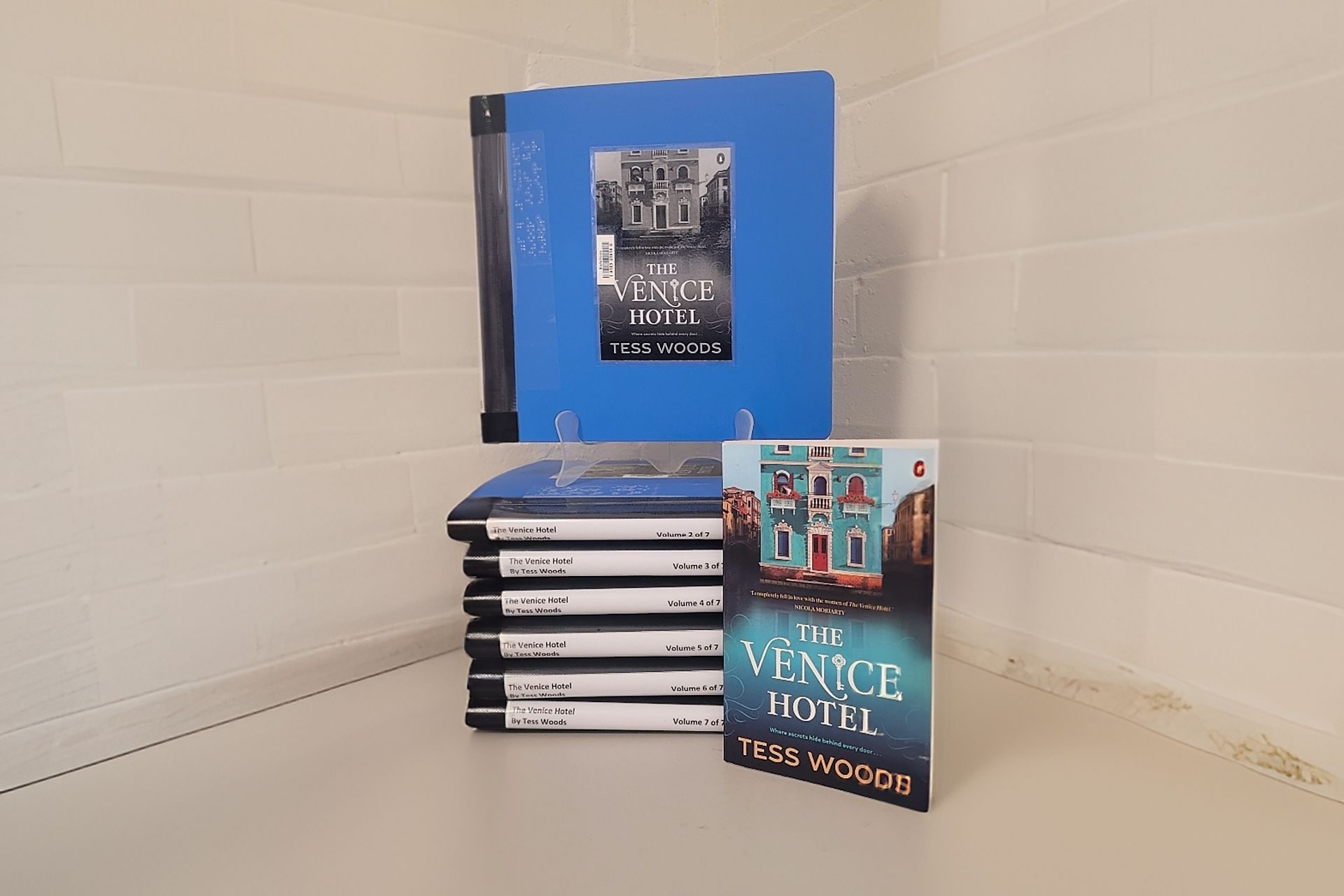
Book Converted to Braille
Here is a book after it has been converted into Braille. It takes up several volumes—much more space than the original. It would have taken up to a year to convert this into Braille, with all the different jobs that people had to do. Someone had to type out this entire book, as Braille House was unable to obtain a file from the publisher.
After a few years, Janet suggested adding Australian magazines to the library, so readers no longer had to rely solely on British and American titles. They love having magazines like Australia Reader’s Digest available. Braille House is the only Braille library in Australia that provides embossed copies of Australian magazines.
Locally, you’ll find Braille at Carseldine Station and bus stops in Fitzgibbon. It’s helpful to have it available at places like old people’s homes, churches, libraries and public restrooms.
Janet comments that “Braille offers people who are blind or have low vision literacy. Audio cannot do that. Literacy is the freedom to be employed, to be independent, to make decisions and most importantly, read.”
Braille House is always looking for volunteer transcribers—anyone who knows MS Word. Volunteers are taught Braille and can become a Duxbury operator or a proofreader—and they get to enjoy reading a wide range of fiction and nonfiction books. The training and transcribing can both be done online from home. Volunteers receive thorough training but not certification. “Ultimately, we’re just grateful people are doing it for us,” remarks Janet. “It’s hard to get people who will put in a minimum of six hours a week.” If you’re interested in volunteering, contact Braille House (07 3848 5257; admin@qbwa.org.au) or drop by 507 Ipswich Rd, Annerley.
Speaking of the Joys of Reading …
The cooler months are perfect for cosying up with a good book. Did you know Fitzgibbon has some street libraries? No need to have a borrower’s card or to check the books out. You simply take the book you’re interested in and return it later.
Perhaps best known is the yellow one at the Community Garden (76 Mount Kaputar Avenue). Cassie’s bright red library is tucked away in the bushes outside 9 Roghan Road.
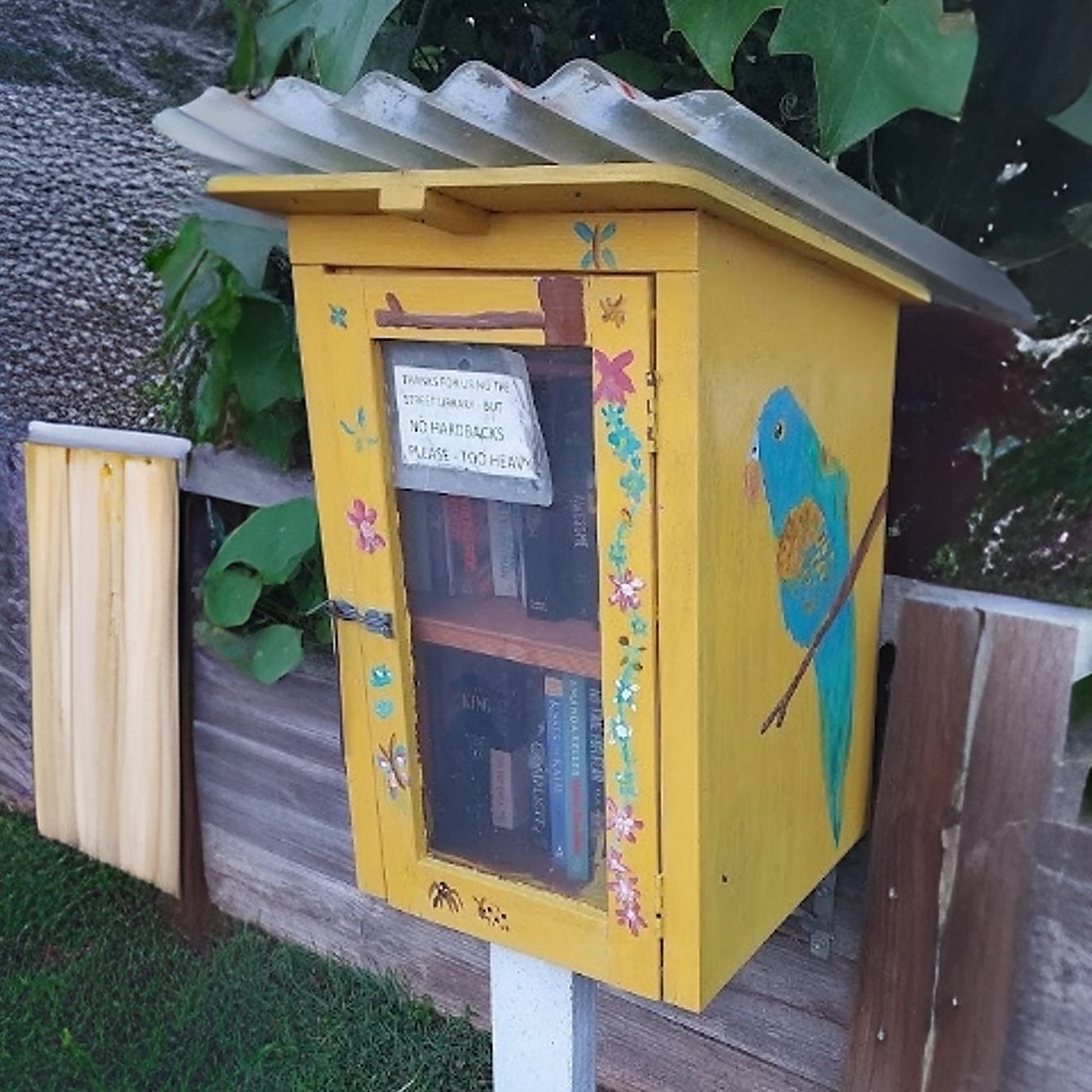
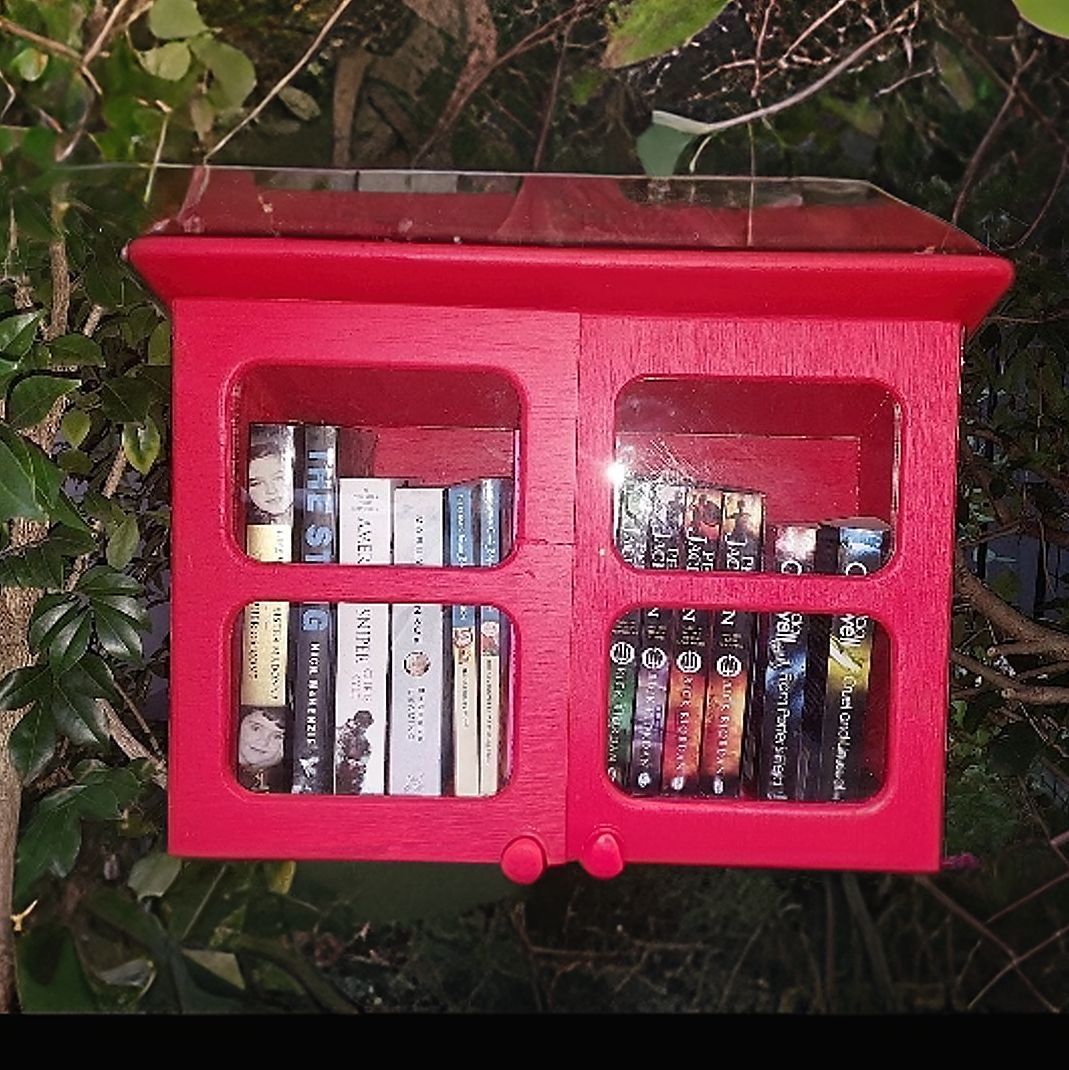
There’s also one by the visitor bay at 280 Handford Road, just outside Fitzgibbon. And there are probably others around the streets of Fitzgibbon, known only to the immediate locals.
It’d be great to have a street library at the Community Centre. If you’re up for building one, please get in touch at facilities@fitzgibboncommunitycentre.org. This would be an ideal project for a handy person or the Men’s Shed.
And of course, there are thousands of books at our fantastic public libraries in Bracken Ridge, Strathpine, Zillmere and Chermside.
If you enjoy chatting about books, come along to the monthly Book Club at the Community Centre (third Tuesday each month, from 6.30 to 7.30 p.m.). Enjoy some lively discussion about the book of the month, broaden your reading horizons and make new friends. A small fee of $2 is charged to cover the hall hire.
Blast from the Past
A very different kind of book was the Poundkeeper’s Book kept by the Warra Animal Shelter to record animals impounded at this facility, which was located roughly where the Emily Seebohm Aquatic Centre is today. Now held in the Brisbane City Archives, this book contains handwritten entries that mostly detail horses and cattle impounded for some reason. Opened in 1978, this Shelter housed animals from several surrounding suburbs. (Fitzgibbon didn’t yet exist as an official suburb, and there were very few people living in this area at that time.)
The first entry in the book is dated 20 July 1981, and the last one is dated 7 March 1992.
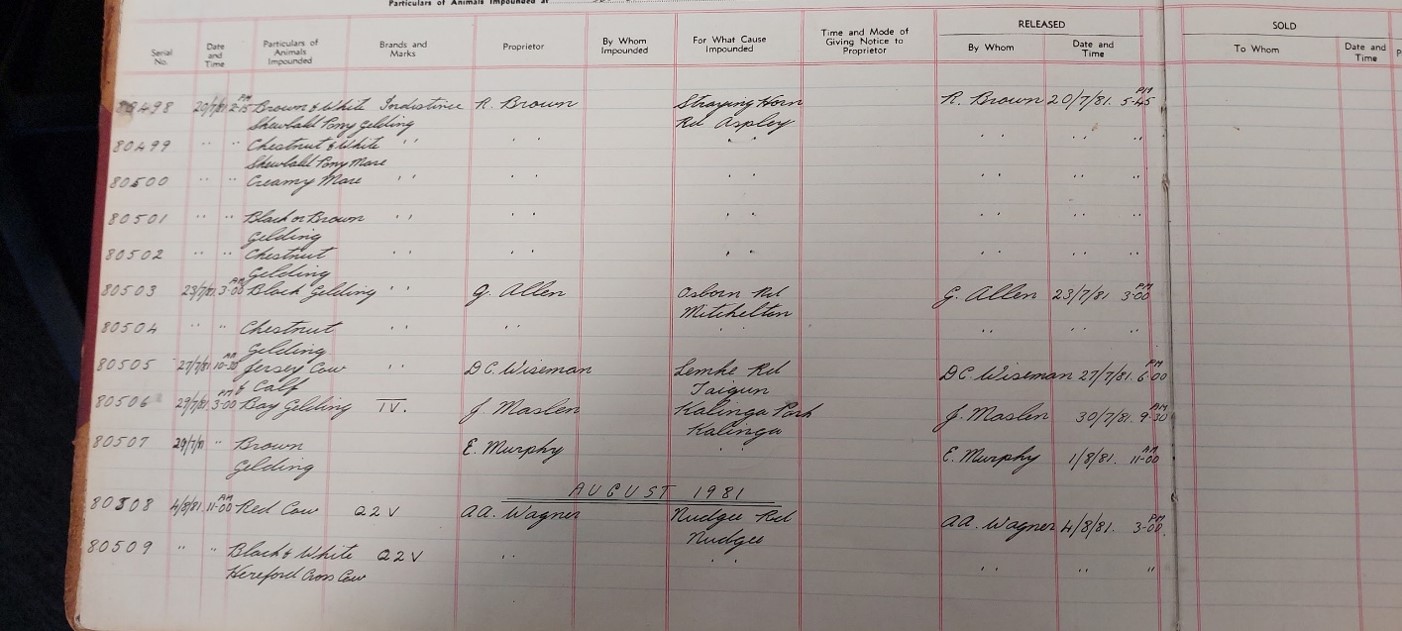
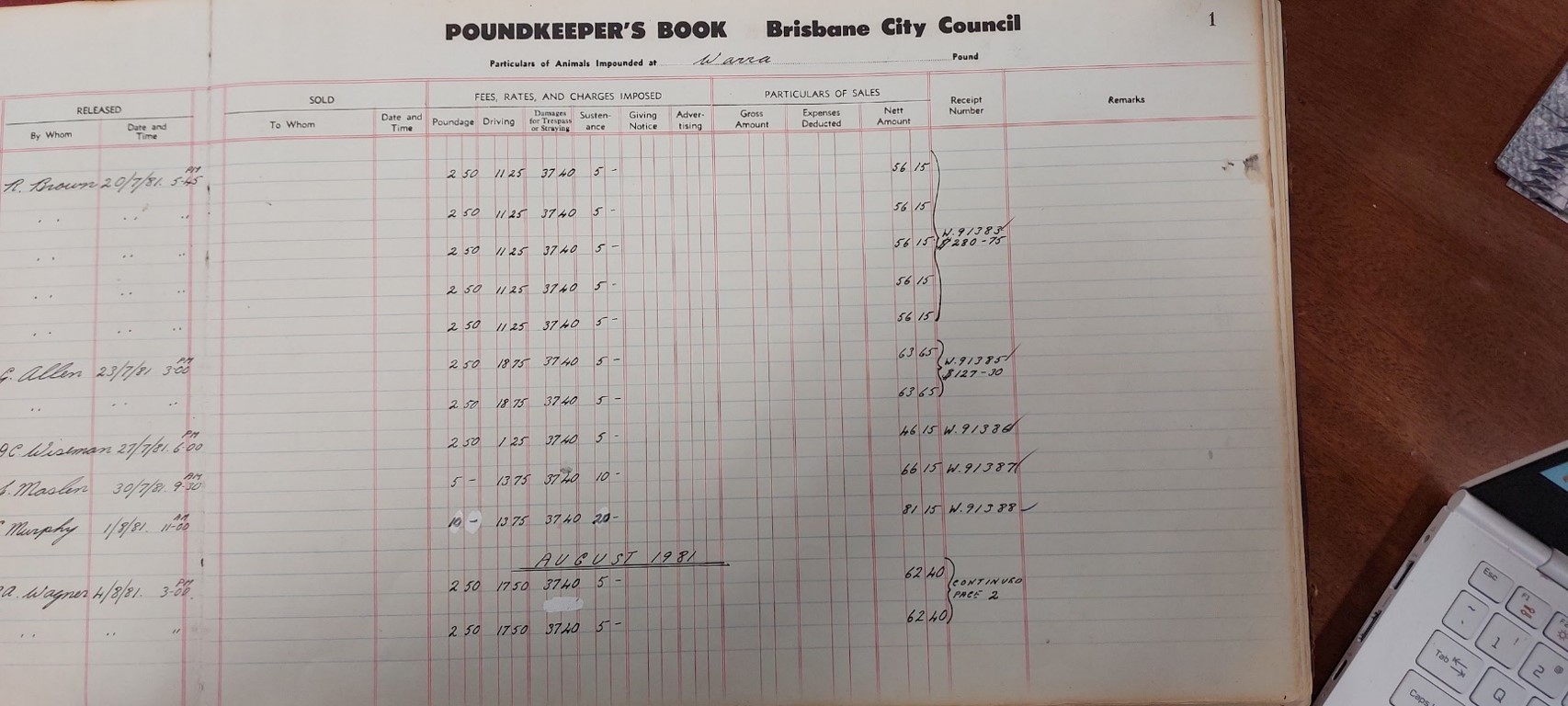
“Although some animals were sold or destroyed, most were released after the owner paid a poundage fee, a driving fee, damages for trespass or straying, and a sustenance fee—usually a total of about fifty or sixty dollars in 1981, but a couple of hundred dollars by 1992.” (Butterflies and Bandicoots: On Becoming Fitzgibbon, 2025: 116).
All this is a far cry from the pound’s successor, what is now the Warra Rehoming Centre (situated further back from Telegraph Road). Sadly, two Staffordshire Bull Terrier puppies were stolen from there on 23 June. Anyone with information that could assist in locating the puppies or offenders is urged to contact the police. Quote this reference number: QP2601226070.
July Market at Fitzgibbon Community Centre
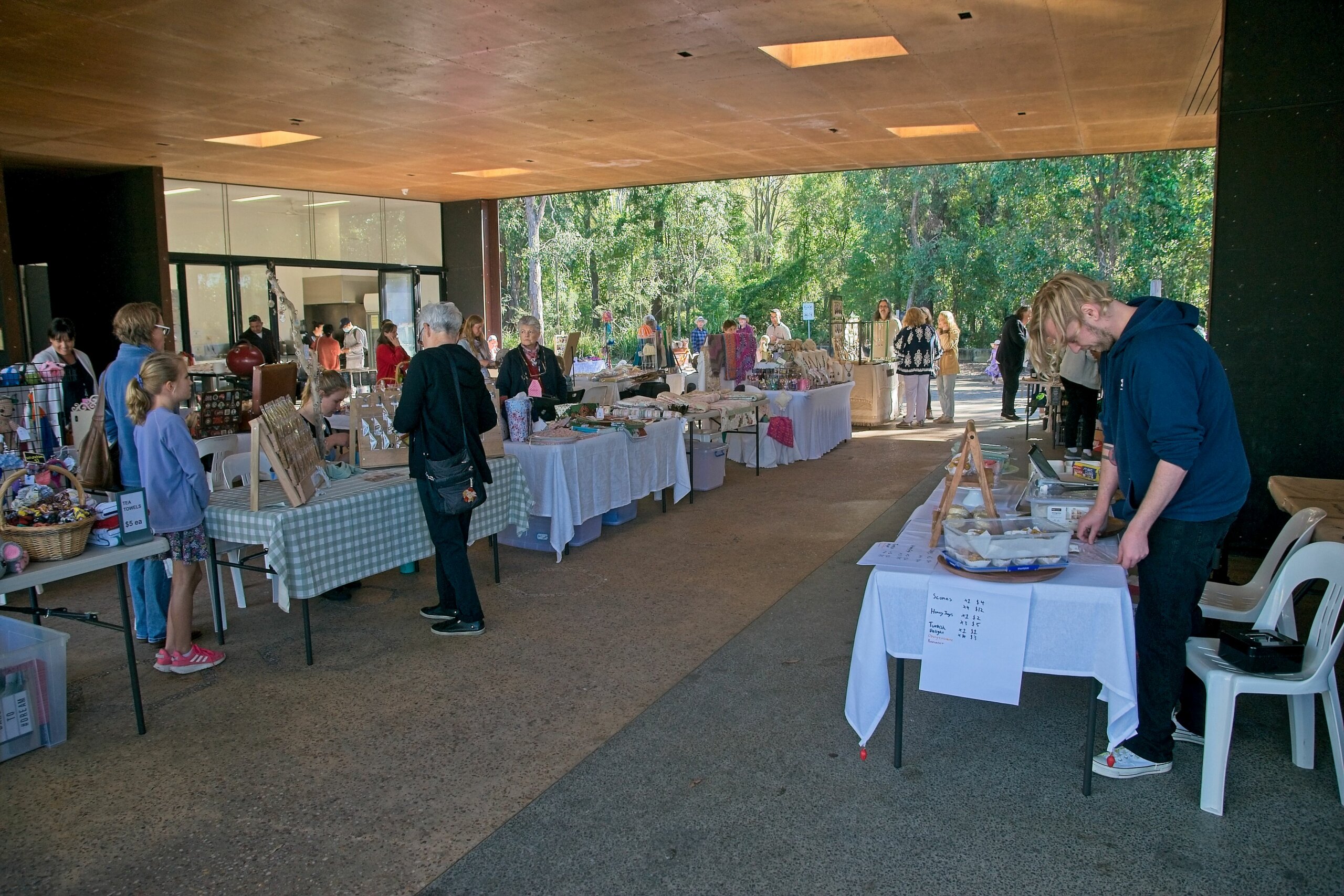
The next market will be held at the Community Centre on Saturday 11 July from 8 a.m. to 1 p.m. There’ll be toys, dolls, plushies, clothes (including baby wear, kids’ clothing and Indian fashion), home decor, coasters, thermal cups, bowl holders, jewellery and beaded items. Not to mention plant pots and potted plants, keychains, blankets, books, singing drums, stationery, balms, oils, tinctures, sprays, spices, herbs, chocolate powders, teas and syrups. But wait, there’s more! Bags, seatbelt covers, aprons and tea towels, fibre art, gifts (including embroidered and sewn items), cultural products, 3D-printed items, crystals, Christmas decorations and other handmade items.
Fitzgibbon Early Learning, a local travel agency, a local real estate agent and a police representative will be on hand to answer questions. And there’ll be a raffle for three great hampers donated by our local politicians. So come along and enjoy a great community atmosphere!
Message from Sandy Landers, Bracken Ridge Ward Councillor
It’s never too late to ignite a love of reading! Council’s free Gold Star Reading Program for children aged 6 to 12 and Little Stars Reading Program for children aged 0 to 5 is back and running until Friday 29 August. Sign up at Bracken Ridge, Sandgate or Zillmere Libraries, or visit Council’s website www.brisbane.qld.gov.au and search ‘Gold Star’ or ‘Little Star’ to register online. A wonderful way to keep the kids engaged and inspired over the cooler months!
For our active older residents, the new GOLD Growing Older and Living Dangerously program for July to December 2026 is now available. Hard copies can be picked up from my office at the Bracken Ridge Library. It’s packed with activities and programs designed to keep you connected and moving.
Brisbane Festival returns this September for three weeks of world-class entertainment across the city! Highlights include the much-loved Riverfire spectacular on Saturday 5th September and the nightly Bright Nights displays running across the whole festival. This is alongside live music, international theatre, family-friendly activities and a great range of free events. Whether you’re after a big night out or a relaxed afternoon with the family, there is plenty to discover. Visit www.brisbanefestival.com.au for the full program or to make a booking.
Stay connected via Facebook.com/Cr.Sandy.Landers or Instagram@crsandylanders.
Message from Bisma Asif, MP for Sandgate
July is shaping up to be an exciting month. We kick off with NAIDOC Week from July 5th, and the Einbunpin Festival is just around the corner. I also look forward to hosting a Cost-of-Living Hub with Anika and Jared on July 29th. Please reach out to my office if you’d like further details.
Our electorate is home to thousands of small businesses that contribute to our local economy, create jobs and help make our community a vibrant and thriving place to live. The Sandgate Small Business Awards were created to recognise the hard work of businesses across Bracken Ridge, Sandgate, Brighton, Deagon, Taigum, Shorncliffe, Fitzgibbon and Bald Hills.
Congratulations to the 2026 winners. In the Outstanding Customer Service category, Fitzgibbon’s Beyond the Brew was awarded Second Runner Up.
Head to my socials to view all of this year’s winners:
www.facebook.com/sandgatebisma
www.instagram.com/sandgatebisma
We look forward to running the Small Business Awards again in 2027. Please reach out to my office if you’d like to be involved via email Sandgate@parliament.qld.gov.au or 3639 9100.
We Want to Hear from You!
If you wish to contribute information, an article or pictures to the newsletters or have ideas for an article, drop us a line through the Community Centre’s Facebook page or website.